
Target URL: /root-canal/
Primary keyword: root canal elmira ny
Secondary keywords: root canal dentist elmira, root canal therapy elmira, endodontics elmira ny, tooth pain root canal elmira, root canal cost elmira
Intent mix: Mixed (urgent symptom + research)
Target length: 2,200, 2,600 words
Authored by: Dr. Richard B. Dunn, DDS, FACD · Reviewed 2026-04-28
SEO metadata (Yoast)
- SEO title: Root Canal in Elmira, NY | Same-Week Appointments | Chemung Family Dental
- Slug:
root-canal-elmira-ny - Meta description: Need a root canal in Elmira, NY? Chemung Family Dental treats severe tooth pain and infected teeth, often the same week. Call (607) 734-2045 to be seen.
- Focus keyphrase: root canal elmira ny
H1
Root Canal in Elmira, NY: Pain Relief and Tooth Preservation at Chemung Family Dental

Photo: Pavel Danilyuk / Pexels
Quick Answer (for AI Overview + Featured Snippet)
A root canal in Elmira, NY removes infected or damaged tissue from inside a tooth, cleans and disinfects the canals, and seals the tooth so you can keep it instead of having it extracted. At Chemung Family Dental, Dr. Richard B. Dunn performs root canal therapy for patients across Chemung, Steuben, and Tioga counties, usually within the same week of your call when you are in pain. The procedure takes 1 to 2 visits, lasts about 60 to 90 minutes per visit, and is comparable in comfort to getting a filling. Typical cost is $900 to $1,500 per tooth depending on which tooth and complexity, and most dental insurance plans cover a substantial portion. Call (607) 734-2045 if you have severe tooth pain or have been told you need a root canal.
Introduction
The pain has been building for a week. Maybe it started as sensitivity to cold, then heat, then anything that touched that side of your mouth. By now, it pulses in your jaw at night and wakes you up at 3 a.m. Over-the-counter pain medication helps for an hour, then it is back. Or maybe the pain has come and gone for months, your dentist took an X-ray, and the words “root canal” came up.
Both of those situations end the same way: the inside of a tooth has become inflamed or infected, and you have two choices. Save the tooth with a root canal, or have it extracted and replace it later with an implant or a bridge. For most patients, root canal therapy is the right answer. It keeps your natural tooth, ends the pain, and costs less than implant replacement.
This page covers what a root canal actually is (it is not what most people think), why dentists recommend it, what happens during the procedure step by step, what it costs in the Elmira area, and what to do if you are reading this in active pain. If you are in active pain right now, skip to the bottom of this page or call (607) 734-2045 to be seen.
In severe pain right now? Call (607) 734-2045 during business hours. We reserve same-day appointments for emergencies every business day.
What is a root canal?
A root canal is a dental procedure that treats infection or severe damage inside a tooth. Despite the bad reputation, the procedure itself is not the source of pain, the infection that requires it is. Most patients describe the actual root canal as feeling similar to getting a deep filling.
Here is what is happening inside your tooth:
- The outer layer is enamel, the hardest substance in your body
- Below that is dentin, a softer layer that makes up the bulk of the tooth
- In the center is the pulp, a small chamber containing nerves, blood vessels, and connective tissue
- The pulp extends down through narrow canals in each root of the tooth and connects to the jawbone
When decay, a crack, or repeated dental work reaches the pulp, the tissue inside becomes inflamed (pulpitis) and eventually infected. Once that happens, the pulp cannot heal on its own. It either dies and becomes a chronic infection, or it stays inflamed and stays painful, sometimes for months.
A root canal solves the problem by removing the diseased pulp, cleaning and disinfecting the empty canals, and sealing them so bacteria cannot return. The outside of the tooth, the part you chew with, stays in place. After the procedure we cap the tooth with a crown so it stays strong long-term.
The procedure has been done for over a hundred years. Modern instruments, magnification, and anesthesia have transformed it. The 1970s root canal your aunt remembers is not the same procedure you would have today.
Signs you may need a root canal
You do not always need a root canal because of pain. Sometimes a tooth has died quietly and only shows up on an X-ray during a routine cleaning. The most common signs that a tooth may need root canal therapy:
- Severe, lingering tooth pain, especially throbbing pain that wakes you at night
- Sharp pain when biting on one specific tooth
- Sensitivity to hot or cold that lingers for more than 30 seconds after the temperature is removed
- A pimple or bump on the gum near a specific tooth (a sign of an abscess draining)
- Visible darkening of one tooth compared to its neighbors
- Swelling of the gum, cheek, or face around a tooth
- A bad taste in the mouth that comes from a single area
- A tooth that has been painful for weeks, even if the pain comes and goes
- A previously root-canaled tooth that has started to ache again
Not every toothache needs a root canal. Sometimes the cause is a deep filling that needs replacement, a crack that can be saved with bonding or a crown, or simple sensitivity that responds to a different toothpaste. The exam and X-rays decide.
Already been told you need a root canal? Bring any X-rays or notes from the other dentist to your visit. We will give you a second opinion at no extra charge.
Why save the tooth instead of pulling it?
This is the most common question we hear: “Why not just pull it?” The honest answer is that an extraction is sometimes the right call, but for most teeth, saving them is better. Here is why.
A natural tooth is the best tooth
Implants and bridges are excellent replacements when a tooth cannot be saved, but no replacement performs exactly like a natural tooth. Your real tooth feels temperature changes, transmits chewing pressure to your brain, and has a periodontal ligament that allows it to flex slightly. Implants do not.
Cost over the long run
A root canal plus crown typically runs $1,800, $3,000 total. An implant plus crown runs $3,500, $6,000. A bridge runs $2,500, $4,500 and damages two healthy neighboring teeth. Saving the tooth is usually less expensive both up front and over a 25-year horizon.
Time
A root canal is finished in 1, 2 visits over a few weeks, including the crown. An implant takes 3, 6 months from extraction to final crown. A bridge takes 3, 4 weeks but requires permanent reduction of two healthy teeth.
Bone preservation
Once a tooth is extracted, the jawbone underneath starts to resorb (shrink). Implants slow this, but they do not fully replace the natural bone-stimulating role of a real tooth root.
That said, some teeth cannot be saved: severely cracked teeth that extend below the gumline, teeth with too much bone loss, teeth that have failed multiple prior root canals. In those cases extraction and implant replacement is the right answer, and we will say so.
What happens during a root canal at Chemung Family Dental
A modern root canal is methodical and predictable. Here is exactly what to expect.
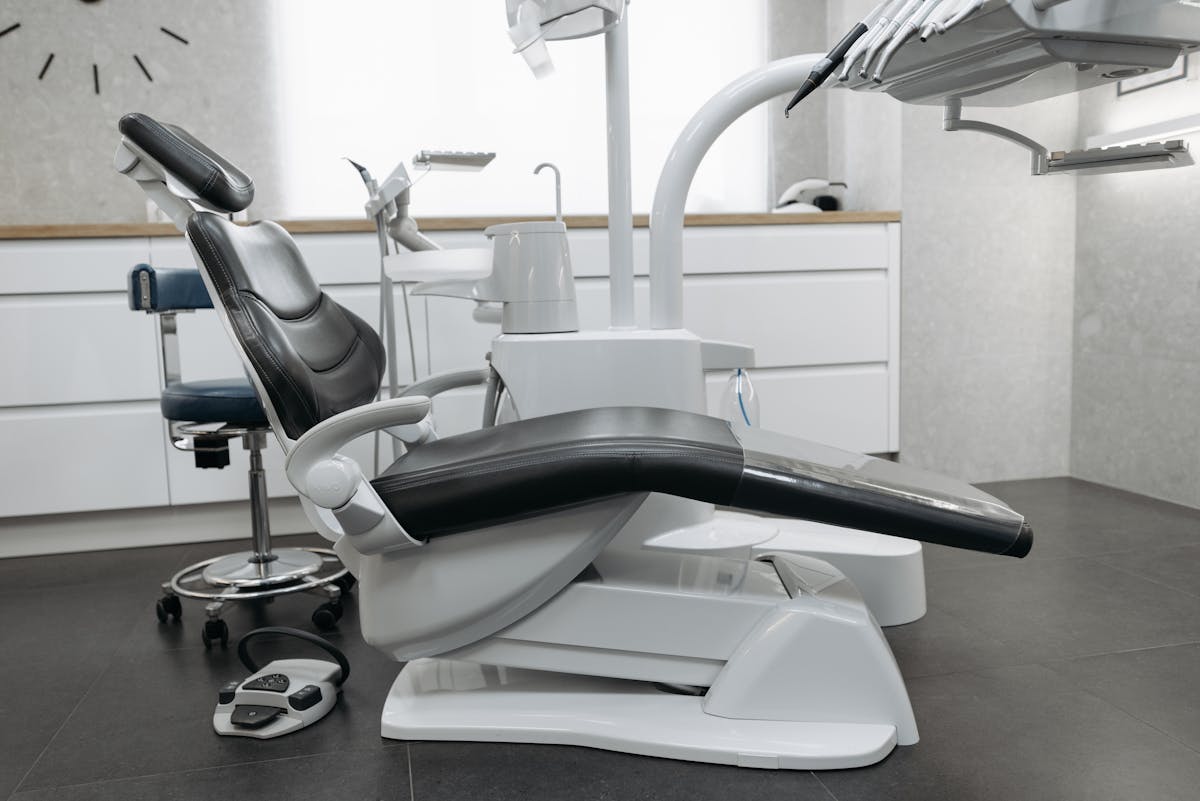
Photo: Pavel Danilyuk / Pexels
Step 1: Numb the tooth
Local anesthetic numbs the tooth and surrounding gum. Most root canals do not require sedation, but it is available for anxious patients. Once we confirm you are fully numb, the tooth and gum should feel pressure but not pain for the rest of the visit.
Step 2: Isolate the tooth
A small rubber sheet, called a rubber dam, isolates the tooth from saliva and bacteria. This is one of the most important steps for long-term success. Root canals done without proper isolation have much higher failure rates.
Step 3: Open the tooth
Using a small drill, we create a small opening through the top of the tooth into the pulp chamber, similar to the access needed for a deep filling.
Step 4: Clean the canals
Using fine flexible files (some operated by hand, some with a slow rotary motor), we clean the diseased pulp out of each canal and shape the inside of the canal to a smooth, slightly tapered profile. We rinse the canals with disinfecting solution between every step.
A front tooth typically has one canal. Bicuspids have one or two. Molars usually have three or four. The number of canals affects the time the procedure takes.
Step 5: Fill and seal
Once clean and dry, we fill the canals with a biocompatible material called gutta-percha plus a sealing cement that locks bacteria out. The access opening on top is filled with a temporary or permanent restoration.
Step 6: Crown the tooth
Most root-canaled teeth (especially molars and bicuspids) need a crown afterward to protect them from cracking. The crown is usually placed in a follow-up visit 2 to 4 weeks later, after the tooth has settled. Front teeth that have minimal damage sometimes need only a permanent filling rather than a full crown.
Mini-story: Mark from Elmira
Mark called us on a Monday morning. He had been managing a throbbing molar all weekend with ibuprofen and could not chew on the right side. We saw him that afternoon. The X-ray showed an abscess on the lower second molar from a deep cavity that had been bothering him for months.
We started the root canal that same visit, finished the cleaning and shaping in 75 minutes, and placed a temporary filling. The throbbing pain stopped that night. Two weeks later, when the tooth was symptom-free, we placed a crown. Total visits: two. Total cost out of pocket after his insurance: about $1,100. Three years later the tooth is still functioning normally and Mark eats steak on that side.
That is the typical arc, urgent pain to permanent fix in under three weeks, with a tooth that lasts decades.
What does a root canal cost in Elmira?
Root canal pricing depends on which tooth is being treated. Front teeth have one canal and are simpler. Back molars have three or four canals and take longer. Approximate ranges in our area:
| Tooth type | Root canal only | Root canal + crown (typical) |
|---|---|---|
| Front tooth (incisor or canine) | $700, $1,000 | $1,500, $2,200 |
| Bicuspid (premolar) | $900, $1,300 | $1,800, $2,600 |
| Molar | $1,100, $1,500 | $2,000, $3,000 |
| Re-treatment of a previous root canal | $1,200, $1,800 | + crown if needed |
Insurance coverage: Most dental insurance plans cover root canals at 50 to 80 percent after deductible, often subject to your annual maximum. Crowns are typically covered at 50 percent. We file claims and break out coverage in writing before treatment.
Financing: For out-of-pocket costs above $500, we offer payment plans through CareCredit and similar lenders, often interest-free for qualified patients.
Cost compared to alternatives: An extraction is usually $200, $400, less expensive up front. But replacing the tooth afterward (implant + crown $3,500, $6,000, or bridge $2,500, $4,500) makes the total far higher than just keeping your tooth.
What it actually feels like to get a root canal
The phrase “root canal” has earned a worse reputation than the procedure deserves. With modern anesthesia, instruments, and technique, most patients describe a root canal as no worse than a deep filling.
Realistic expectations:
- During the procedure: Pressure and vibration. No sharp pain. The tooth and gum should feel completely numb. If you feel anything sharp, raise your hand, we add more anesthetic immediately.
- Right after: Mild tenderness in the area, similar to any other dental work. Most patients eat soft foods and return to work the next day.
- Pain medication: Ibuprofen or acetaminophen as directed. Severe pain medications are rarely needed.
- A day or two after: Some patients feel a deep ache as the inflammation around the root settles. This usually resolves within 2 to 5 days.
- Long-term: A successful root-canaled tooth feels like any other tooth. You should not feel ongoing pain, sensitivity, or pressure when biting after a few weeks.
If pain persists or worsens beyond a week, call us. Most cases settle on schedule, but a small percentage require a follow-up visit to adjust the bite or address a missed canal.
Why patients in the Southern Tier choose Chemung Family Dental for root canal therapy
A few honest reasons patients pick us when they need root canal therapy:
- Same-week appointments for severe pain. When you call us in real pain, we get you in. Tooth pain rarely waits.
- In-house procedure for most cases. Dr. Dunn performs root canal therapy on most front teeth, bicuspids, and many molars in our office, no separate referral, no extra waiting list.
- Honest referrals when needed. Some root canals (severe curvature, calcified canals, complicated re-treatment) are best handled by an endodontic specialist. We refer to a trusted regional endodontist when that is the right call, and we coordinate the crown placement afterward.
- One-stop crown. After the root canal, we place the protective crown in our office. No second provider, no second set of records, no scheduling between two practices.
- Modern equipment. Digital X-rays, magnification, and rubber-dam isolation are standard at every root canal visit. These are not optional, they affect long-term success.
- Transparent pricing. Written estimate before any work begins. Insurance filed for you. No surprise add-ons.
Mini-story: Linda from Big Flats
Linda called on a Friday afternoon with a swollen cheek and a tooth that had been getting worse for two weeks. We saw her within two hours. The exam showed a dental abscess on an upper molar that had been root-canaled 14 years earlier, an old failure that needed re-treatment.
We started antibiotics that day to control the infection, scheduled the re-treatment for the following Tuesday, finished it in 90 minutes, placed a new crown three weeks later, and her swelling was gone within four days. Total out of pocket after her insurance contribution: about $1,400 for the re-treatment, $600 for the new crown. The tooth has been pain-free for two years.
That kind of fast same-week response is what most root canal patients actually need, not a wait until next month.
Frequently asked questions
Are root canals painful?
The procedure itself is comparable to getting a filling. Most of the pain associated with “needing a root canal” comes from the infection that necessitates it. Once the diseased pulp is removed and the tooth is sealed, the pain almost always resolves within a few days.
How long does a root canal take?
Most single-visit root canals take 60 to 90 minutes. Complex molars or re-treatments may require two visits 1, 2 weeks apart. Crown placement adds a separate 60-minute visit.
How long does a root-canaled tooth last?
A successful root canal followed by a properly placed crown commonly lasts 15 to 25 years, and many last for life. The most common cause of late failure is a crack in the tooth, a new cavity at the gumline, or gum disease, all of which are preventable with regular cleanings.
Can I drive home after a root canal?
Yes. Local anesthesia wears off in a few hours and does not impair driving. If you choose sedation, you will need a driver.
Will I need antibiotics?
Sometimes. Active infections with swelling, fever, or significant abscess often require a course of antibiotics, either before treatment or alongside it. Most uncomplicated root canals do not require antibiotics. The exam decides.
How soon can I eat after a root canal?
You can eat once the anesthesia wears off, usually 2 to 4 hours after the visit. Avoid chewing directly on the treated tooth until the permanent crown is placed, since the temporary filling is more fragile than a final restoration.
Why do I need a crown after a root canal?
Root-canaled teeth are more brittle than living teeth and crack more easily under chewing force. A crown protects the tooth from fracture and dramatically improves long-term success rates, especially for molars and bicuspids. Front teeth occasionally do well with just a permanent filling.
Can a tooth get infected again after a root canal?
Yes, though it is uncommon. Re-infection happens if a canal was missed during the original treatment, if the seal failed, or if a crack developed in the tooth later. Re-treatment can usually save the tooth a second time, or extraction and implant replacement is an alternative.
Is a root canal cheaper than an extraction?
The root canal itself usually costs more than an extraction up front. But once you add the cost of replacing the extracted tooth (implant, bridge, or partial denture), the total cost of saving the tooth with a root canal is almost always lower over a 25-year horizon.
What happens if I do not get a root canal when I need one?
The infection does not resolve on its own. It typically progresses, sometimes painfully, sometimes silently, and can spread to surrounding bone or, rarely, to other parts of the body. Untreated dental infections occasionally cause serious medical complications. The tooth eventually has to come out, often as an emergency, with replacement costs higher than the root canal would have been.
Can I still have a dental cleaning if I am scheduled for a root canal?
Yes, in most cases. We coordinate cleaning and root canal therapy when both are needed.
Schedule a root canal evaluation in Elmira
If you are in pain or have been told you need a root canal, the next step is a 30-minute exam with X-rays. We will confirm whether root canal therapy is the right answer, give you a written treatment plan with real numbers, and start treatment that week if needed.
Chemung Family Dental
1007 Broadway Street, Elmira, NY
(607) 734-2045
Monday, Wednesday 7 am, 4 pm · Thursday 7 am, 2 pm
[ CALL (607) 734-2045 ] [ REQUEST A ROOT CANAL EVALUATION ]
If you have a recent panoramic X-ray or notes from another dentist, bring them or have them sent over before your visit. It often saves you a second X-ray.
Reviewed by Richard B. Dunn, DDS, FACD. Dr. Dunn provides root canal therapy and follow-up restorative care for patients across Chemung, Steuben, and Tioga counties. This article is for educational purposes and is not a substitute for an in-person dental evaluation.