
How Long Do Dental Crowns Last? A Dentist's Honest Answer
The short answer: a well-made crown can last 15 to 30 years. The longer answer—why some last a decade and others outlive the patient—is where it gets interesting.
The Real Lifespan of a Dental Crown
From the chair, not from a brochure
If a crown is in your future—or already in your mouth—you want to know one thing: how long do dental crowns last, really? Marketing copy will tell you “a lifetime.” Insurance schedules will tell you “5 to 7 years.” The truth sits in the middle, and it depends on factors you can mostly control.
This is what we tell our own family members when they ask the same question.
The Real Lifespan of a Dental Crown
The honest range, based on clinical research and decades of cases we’ve seen ourselves, is 15 to 30 years. The American College of Prosthodontists puts the average somewhere between 15 and 20 years for most patients, but plenty of crowns make it past 25 years with no issue at all.
The variation isn’t random. It comes down to four things: the material, the dentist who made it, the tooth underneath it, and how you treat it once it’s in.
How Long Each Type of Crown Lasts
Not all crowns are built the same. Here’s what to expect from each major material:
Porcelain-fused-to-metal (PFM)
Lifespan: 10 to 25 years. The metal core makes them strong, but the porcelain layer can chip over time, especially for grinders. Slightly less natural-looking than all-ceramic options because the metal can show as a dark line at the gum line.
All-ceramic / all-porcelain
Lifespan: 10 to 20 years. Most natural-looking option. Modern all-ceramic crowns are strong, but historically they were more prone to fracture than metal-backed crowns. Best choice for front teeth where appearance matters most.
Zirconia
Lifespan: 15 to 25+ years. Extremely strong, fracture-resistant, and looks reasonably natural. Well-suited for back teeth where biting forces are highest. Has become the dominant material in modern dentistry for good reason.
Gold (alloy)
Lifespan: 20 to 40 years. Yes, really. Gold crowns have the longest documented lifespan of any crown material. They wear at the same rate as natural enamel, which is gentle on opposing teeth. They just aren’t a tooth color, so most patients only consider them for back molars no one sees.
Why Some Crowns Fail Early
When a crown doesn’t last as long as it should, there’s almost always a specific reason. The most common culprits we see in our practice:
- The tooth underneath decays. A crown protects the part of the tooth above the gum, but if bacteria sneak under the edge, decay can spread silently. This is the #1 reason crowns need replacement.
- Grinding and clenching. Patients who grind their teeth at night put far more force on crowns than chewing alone. Without a nightguard, that pressure can crack porcelain or loosen the cement bond.
- Poor fit. A crown that doesn’t seat perfectly creates a microscopic gap where bacteria thrive. This is more about the lab work and the dentist’s prep than anything you can control after the fact.
- Old failing fillings underneath. If a tooth had a large filling that was already breaking down before the crown was placed, the foundation isn’t stable. Some crowns fail because of what was happening below them, not the crown itself.
- Trauma. A blow to the mouth, biting on a popcorn kernel or olive pit, or chewing ice can crack any crown.
What You Can Do to Make Your Crown Last 25+ Years
Most of the difference between a 12-year crown and a 30-year crown is behavior, not biology. The patients whose crowns we see in their sixth decade did most of these things:
- Brush twice daily and floss around the crown every day. The gum line where the crown meets the tooth is the vulnerable spot. Don’t skip it.
- Wear a nightguard if you grind. If your dentist mentions wear facets, don’t dismiss it. A custom nightguard costs a few hundred dollars and protects thousands of dollars of dental work.
- Don’t chew ice, hard candy, or pen caps. Crowns are tough but not invincible. The same way you wouldn’t kick a curb in nice shoes, give your crown the same respect.
- See your dentist twice a year. A professional can spot a hairline crack, decay starting at the margin, or a loose crown long before you’d notice. Catching these early often means a repair instead of a replacement.
- Treat gum disease aggressively. Gum recession exposes the root surface where the crown’s edge sits. Bleeding gums aren’t just cosmetic—they’re a warning that the foundation under your crown may be at risk.
Signs Your Crown Needs Attention
Most failing crowns give you warning signs. Don’t ignore these:
- Pain when you bite down or release pressure
- Sensitivity to hot, cold, or sweet that wasn’t there before
- A crown that feels loose or shifts when you press on it
- A bad taste, especially around the crown
- A visible chip, crack, or worn edge
- Your gums pulling back from the edge of the crown
Any of these warrant a call to your dentist. Sometimes the fix is simple—re-cementing a loose crown, smoothing a rough edge, treating gum recession. Catching it early often means avoiding a full replacement.
What If My Crown Falls Off?
It happens. The cement bond that holds a crown in place can weaken over years, especially after decay forms underneath. If your crown comes off:
- Save it. Don’t throw it away.
- Don’t try to glue it back with super glue, denture adhesive, or anything from your medicine cabinet. These can damage the tooth and the crown both.
- Avoid chewing on that side of your mouth.
- Call your dentist within 24–48 hours. The exposed tooth is vulnerable to fracture and decay quickly.
How We Approach Crown Care at Chemung Family Dental
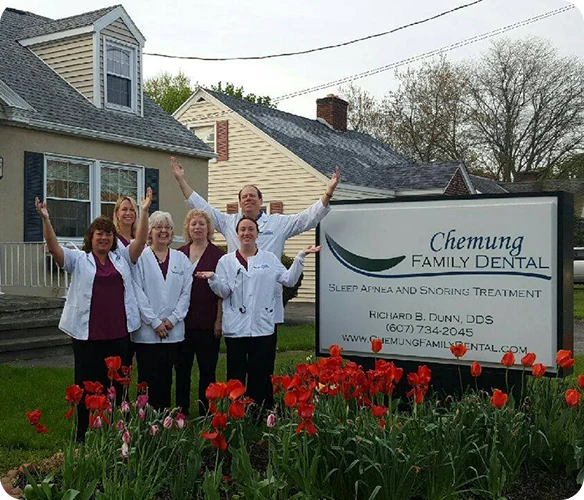
We’ve been replacing—and not replacing—crowns in the Elmira community for over thirty years. Our philosophy: a well-made crown should be a long-term investment, not a recurring expense. We use modern zirconia and all-ceramic materials, take the time to ensure precise fit, and follow up to catch problems before they require replacement.
If you’re not sure how old your existing crowns are, what they’re made of, or whether they’re holding up well, that’s exactly what an exam is for. We’ll tell you the truth—even when the truth is “this one is fine, leave it alone.”
The Bottom Line
How long do dental crowns last? A well-placed crown made of quality material in a healthy mouth lasts 15 to 30 years on average. Gold crowns can outlast you. Porcelain crowns last longer when you protect them with a nightguard, treat your gums well, and show up for routine care. The difference between a 10-year crown and a 30-year crown is rarely the crown itself—it’s everything that happens around it.
Frequently Asked Questions
Most modern dental crowns last 15 to 20 years on average, though many make it past 25 years with proper care. Zirconia and gold crowns tend to last the longest, while all-porcelain crowns on grinders may need replacement sooner.
The most common reason is decay forming under the crown’s edge where bacteria sneak in. Other causes include grinding without a nightguard, an imprecise fit during placement, gum recession exposing the root, or trauma from biting hard objects.
It’s possible but not guaranteed. Gold crowns have documented cases of lasting 30–40+ years. Modern zirconia and porcelain crowns can also reach 25+ years with disciplined oral hygiene, no grinding (or a nightguard if you do), and regular dental checkups.
Most dental insurance plans cover crown replacement once every 5 to 10 years per tooth, depending on the plan. If a crown fails earlier due to a defect, some manufacturers and dentists offer warranties; ask before you have one placed.
Save the crown, avoid chewing on that side, don’t try to glue it back yourself, and call your dentist within 24–48 hours. Often the crown can be re-cemented in one short visit—but only if the underlying tooth hasn’t been damaged or developed decay.
Ready to experience care that feels different?
Join the families who have trusted us for over 37 years.